
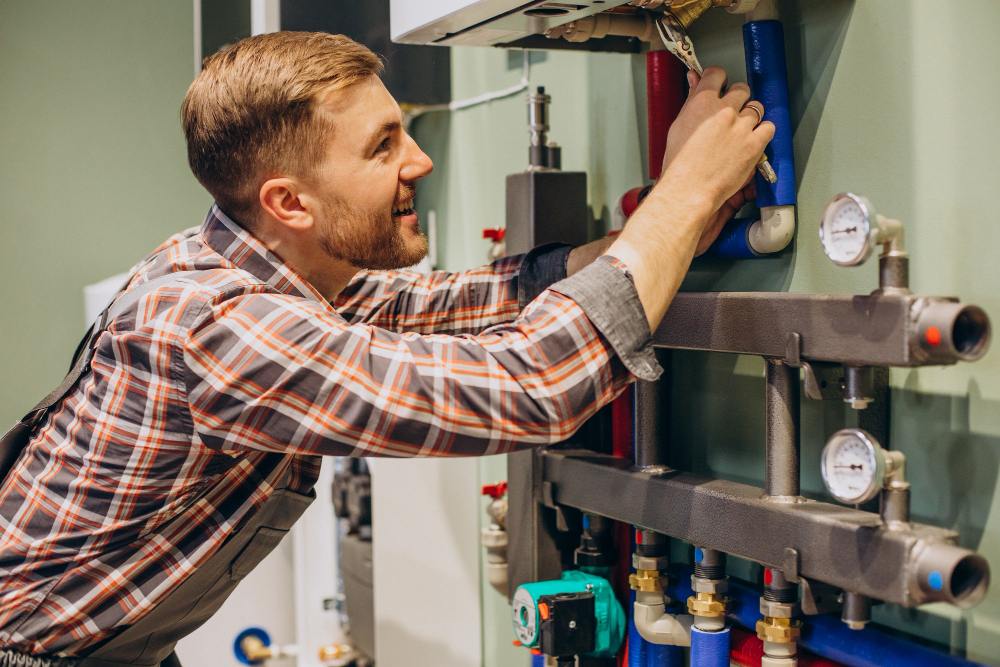
To repressurise a boiler, switch it off and allow it to cool. Find the filling loop, which is a silver pipe attached with valves at either end. Open the valves slowly so that water can enter into the system until the pressure metre reads between 1 and 1.5 bar, and then close the valves tightly.
In your home’s heating system, hot water circulates and exerts a force during circulation that causes a pressure in the system, including in the network of pipes and radiators, known as boiler pressure. This pressure is crucial for the boiler’s optimal functioning and even distribution of heat throughout the home.
Over time, a boiler can drop this pressure due to boiler problems and leaks, leading to no hot water or central heating. You wouldn’t want to be without hot water and central heating, especially during winter. Therefore, it is important to understand how to diagnose when a boiler has lost pressure and how to resolve it. We have compiled a detailed guide on what causes a boiler to lose pressure and how to repressurise it.
What Is Boiler Pressure, And Why Is It Important?
Boiler pressure is a vital factor for the safe and efficient functionality of a heating system. For boilers to operate smoothly, the optimal set range of pressure is between 0.7 bar and 2.5 bar. If the pressure infrequently falls below the set range, it will affect the boiler’s functionality. You can restore this pressure using a filling loop, which is usually located on the system.
Importance
Your central heating system requires stable pressure to work effectively. The boiler helps in heating cold water that flows around a circuit of pipework and radiators through your home. If there is low pressure in the boiler, the heating system will not heat the water properly or break down completely, causing uneven heating or loss of hot water. For your boiler to operate safely, ensure stable water pressure when the pipes expand and contract with the heat, preventing issues from arising when your home is being heated.
What Causes a Boiler to Lose Pressure?
The most common causes your boiler is losing pressure are:
First, leaks anywhere in the appliance or the system can lead to a loss of water pressure, most commonly around the radiators, valves, pipes, or other system components.
Second, bleeding radiators can cause a loss of boiler pressure that is important to resolve on time.
The other major reason for the drop in pressure is the corrosion or loosening of the circuit of pipes and radiators connected to the boiler system, allowing water to escape the system.
How to Repressurise the Boiler?
Repressurising your boiler simply means allowing more water to enter the system. However, before repressurising, it is important to know about your boiler type. Every boiler is different and follows a different repressurising process. Most modern combi boilers can be repressurized with the help of a filling loop, while the process for other types of boilers is slightly different. Always check the manufacturer’s guide for your boiler before starting.
As a general guide, the majority of boilers follow the same process.
Turn Off the Boiler
You should switch off the heating system and let the boiler cool completely before carrying out any work. This will help avoid any injury or burns from the hot water inside the system.
Locate The Boiler Filling Loop
The filling loop is a silver, flexible hose that connects two small valves beneath the boiler. Water is added to your system using this filling loop, which increases the pressure. Ensure it is safely attached to the boiler’s pipes to maintain optimal performance.
Open The Valves to Add Water
Slowly turn both valves on either side of the filling loop anti-clockwise until the line on the valve is directly in line with the pipe. Allow water to flow through the system and hear the sound of flowing water. As the water enters, the pressure inside the boiler rebalances.
Check Boiler Pressure
Keep the valves open and check the pressure gauge to read the display. You should keep seeing the gauge until the display reads between 1 and 1.5 bar. This is the ideal pressure, and do not let the pressure increase above 2.5 bar. If pressure surpasses this range, it can cause damage to the boiler and the entire heating system.
Turn Off the Valves
Once the pressure reaches the recommended ideal range, turn both valves clockwise to shut them off. This will stop the water flow and stop further changes to boiler pressure.
Remove The Filling Loop
You should remove the filling loop carefully once you have made sure the pressure is at the correct level. Safe detachment helps you prevent accidental adjustments to the pressure and keeps the loop from getting spoiled. After removing, store it in a safe place.
Switch On the Boiler
After completing the repressurising process, switch on your boiler and ensure everything is operating efficiently and correctly. Check your home returns to its ideal comfort level.
Conclusion
Stable boiler pressure is crucial for ensuring your heating system’s safe and effective operation. This keeps your home warm and cosy all around the year. If your boiler gets low pressure, you can easily re-pressurise your boiler and keep it running efficiently by following the above-mentioned process. Regularly check and maintain your boiler’s pressure to avoid low boiler pressure and uneven heating issues.
If you face boiler pressure issues on a regular basis, there is a possibility of a leak in the heating system that can cause water damage to your home. In such a case, you can call our professionals at Hemel Plumbing and Heating to find and fix the issue immediately.